
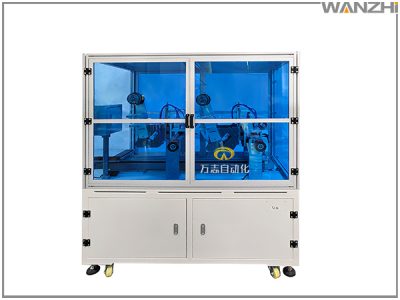
Automatic high-temperature tape applicator
The automatic high-temperature tape applicator was developed specifically for masking tape application in electronics manufacturing, and performs automated application of…
Learn more →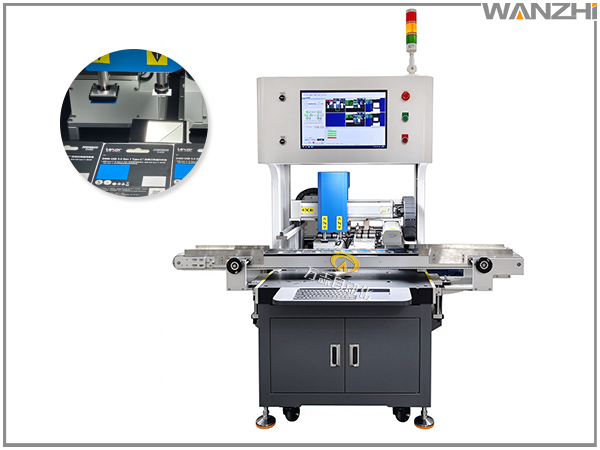
The dual-head vision labeling machine is automated high-accuracy labeling equipment that replaces mechanical templates with machine vision and a single dispensing mechanism with two independent label-picking heads. After a workpiece enters the labeling station, industrial cameras first capture the workpiece’s datum features and the label outline, and the control system calculates the position and angle deviation between them and distributes the compensation to the motion mechanisms of the pick-and-place heads, so the label coincides with the intended position at the moment of application. The whole process is closed-loop across images, algorithms, and servo motion, no longer relying on the physical fit accuracy of fixtures and locating blocks. The two heads can act synchronously to apply 2 labels in one loading, doubling efficiency; they can also act independently by cycle to handle labels of different specifications and positions. This reduces investment in line-specific machines, and the unit can be used standalone or as a linked station in an automated line.
| Label roll specifications | Inner diameter 76 mm, outer diameter no more than 250 mm |
| Labeling accuracy | ±0.1–0.2 mm (excluding incoming material and label tolerance) |
| Labeling cycle | 40–80 pcs/min (dual heads in parallel, depending on product and label size) |
| Control system | Industrial computer with servo motion control |
The automatic high-temperature tape applicator was developed specifically for masking tape application in electronics manufacturing, and performs automated application of…
Learn more →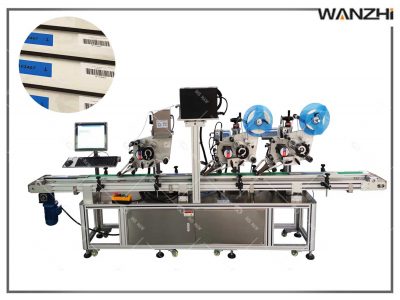
This machine is a dedicated print-and-apply labeling machine for aluminum materials developed by Wanzhi. It targets applications that require labeling…
Learn more →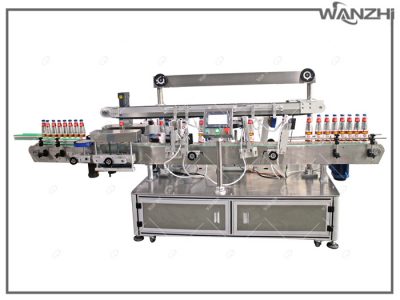
WZ-307 automatic three-label labeling machine for seasoning bottles. I. Basic purpose: the automatic three-label labeling machine for…
Learn more →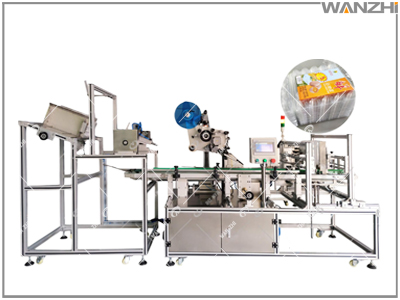
Model:WZ-160
The WZ-160 automatic egg carton labeling machine is a fully automatic labeling system custom-developed by Wanzhi Automation for top-surface labeling…
Learn more →