
When choosing a semi-automatic labeling machine, 90% of buyers overlook the risk in the “line”
Many buyers evaluating a semi-automatic flat-surface labeling machine fix their eyes on core parameters such as “labeling accuracy ±0.5~1mm” and “efficiency 15-30pcs/min”, assuming that if the machine itself is solid enough and applies labels without bubbles or lifted edges, the selection is a success. But as someone who has spent years on production lines, I have to say it plainly: the most lethal risk in choosing and applying a semi-automatic labeling machine is not how well the machine itself “labels” but how well it fits your existing production “line” — a systemic trap usually hidden by the illusion of “standalone operation”.
1. The “cycle-time gap” risk hidden by “manual loading”
The deeper risk: What you should really fear is not a failed pneumatic cylinder on the labeling machine, but the slow death of the whole line after the machine is introduced — efficiency falls instead of rising, and the bottleneck moves from “labeling” to waiting for “loading” and “unloading”.
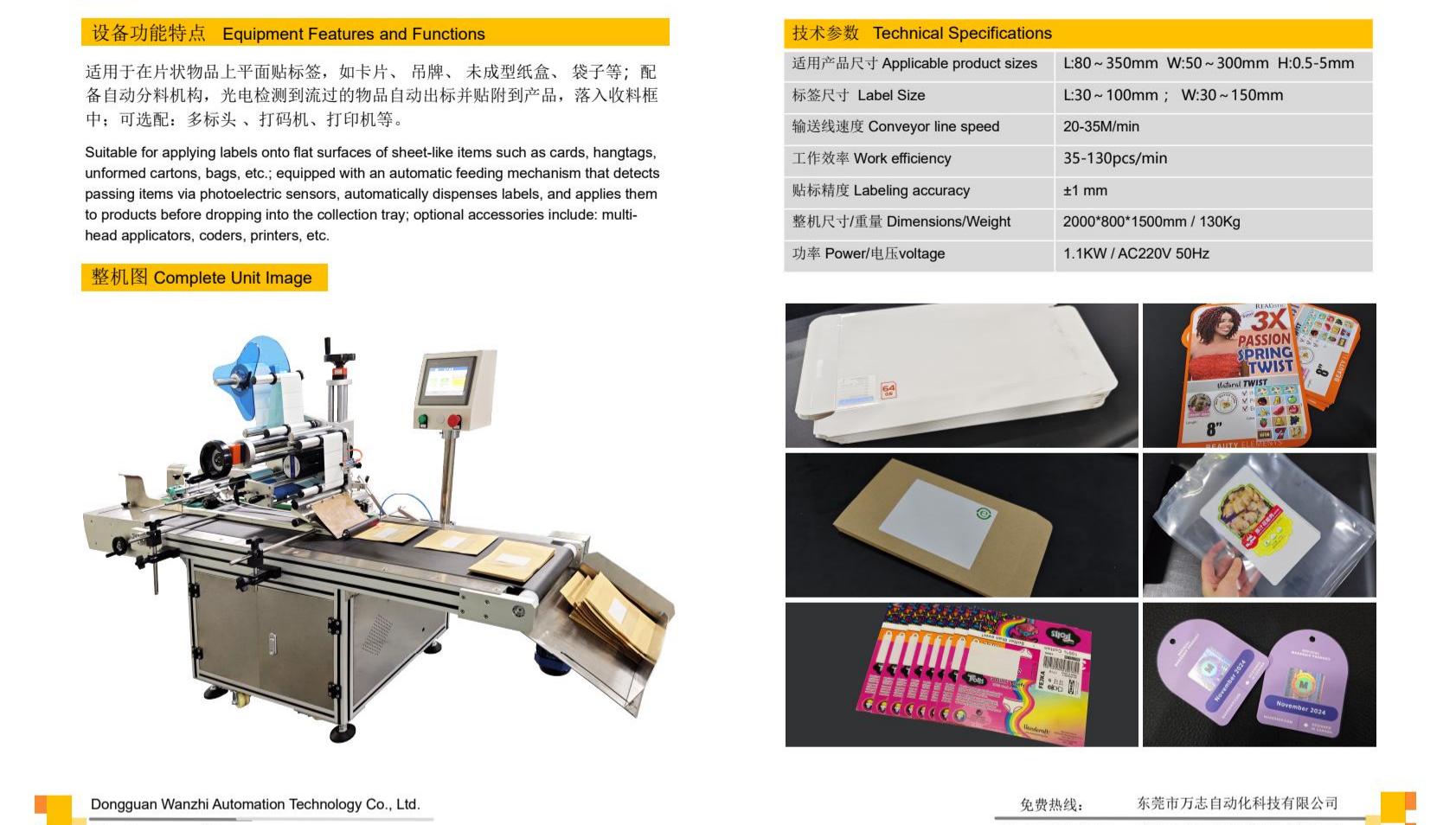
What masks it: “Manual loading and positioning, automatic pressing and labeling” sounds easy in the sales pitch. The “15-30pcs/min” figure comes from laboratory conditions with a skilled operator, ideal material and a perfectly matched fixture. In real production, however, the pace of manual loading fluctuates and people have a fatigue limit. When your staff also have to sort incoming material and deal with the occasional wrinkled label, actual output may not even reach 60% of the theoretical value. The “high-efficiency” machine becomes the line’s worst bottleneck.
The underlying logic: The core value of semi-automatic equipment is to “assist people”, not to “replace people”. Its efficiency ceiling is set by how fast a person can operate. If your upstream material arrives loose and needs orienting, or if there is manual cartoning and inspection after labeling, then what you are buying is not a labeling machine but a “cycle-time black hole” that needs a dedicated operator. It is not integrated into your “line”; it just stands there on its own.
2. The “fixture compatibility” risk hidden behind the appeal of “multi-side labeling”
The deeper risk: The highlighted ability to “label one, two or three sides” is a big temptation, but it hides a high-risk precondition: all of these functions depend on custom “dedicated positioning fixtures” being designed and changed.
What masks it: “Changing products only means changing the positioning fixture; beginners can pick it up quickly” sounds wonderful. In reality, fixture design, machining and debugging can take weeks, at a cost from several hundred to over a thousand. When you have several products to switch between frequently, the “off-line time” for changing fixtures may be longer than the production time. More importantly, fixture positioning accuracy directly determines labeling accuracy. If a fixture is designed with a slight deviation and the product shifts when pneumatically pressed, the advertised ±0.5~1mm accuracy is meaningless.
The underlying logic: What you buy is a precision “labeling machine”, but what truly fits your product is the fixture. This is exactly where a professional manufacturer such as Wanzhi Automation adds value: it does not just sell standard machines — its core capability is providing “custom-built” positioning solutions for your specific workpiece, such as special-shaped hardware parts or round cans. Ignoring the fixture support on the “line” is like buying a bare machine that cannot be put to work.
3. Warning signs to check yourself
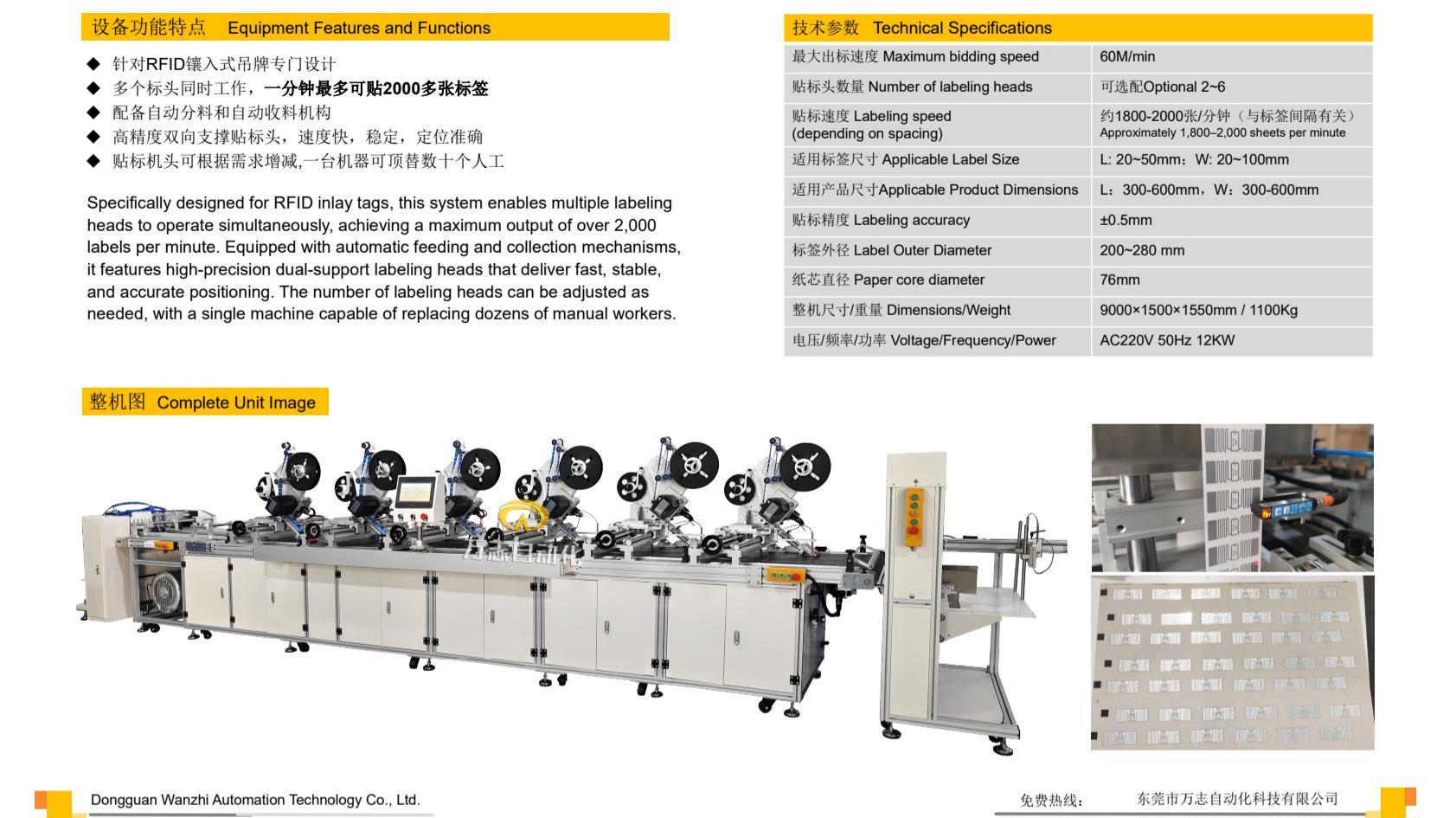
To avoid these traps, check yourself against the following signals:
[ ] Warning sign 1: When evaluating equipment, you looked only at static specifications and did not ask the vendor for a “measured takt video” or “trial run report” based on your own materials. [ ] Warning sign 2: In line planning, you did not reserve enough operating space and stations for manual loading, unloading and inspection, so that once the equipment is in place, operators can barely turn around. [ ] Warning sign 3: You have more than 3 products in different sizes or shapes that need labeling, but the budget does not reserve enough fixture customization cost and debugging time for each product. [ ] Warning sign 4: Your incoming parts come straight from the upstream process, and you did not consider adding a simple aligning and guiding “inline” auxiliary device before labeling, but instead expect workers to line them up by hand.
4. The exception
This risk is not fatal for every company. If you make a single product with fixed dimensions in large batches — for example long-term labeling for one toy model — the risk of semi-automatic equipment drops sharply. In that case you can focus more on the machine’s durability and the speed of after-sales response than on fitting the “line”.
5. FAQ
Q1: Should I just buy a fully automatic labeling machine to be safe?
A: Not necessarily. Fully automatic equipment costs more and changeover is more complicated. For small and medium batches with many varieties, a “human plus machine” approach of semi-automatic equipment with deep custom engineering often has a lower total cost of ownership (TCO). What matters is whether the equipment supplier has “solution integration” capability.
Q2: How can I avoid being misled by the “15-30pcs/min” figure?
A: Ask the manufacturer for an actual test, on site or remotely, using your real material and a designated operator. Look at the stable cycle time rather than peak speed, and assess how much efficiency drops after an operator has worked for an hour.
Q3: If my fixtures need frequent changes, what can be optimized?
A: This is exactly where a manufacturer like Wanzhi Automation adds value. You can ask for a “quick-change” or “quick-change fixture” design — for example a locating pin plus quick clamp structure that cuts changeover from minutes to seconds. This falls in the typical “custom engineering” category and is the key to removing changeover risk on the “line”.
Final advice: Lift your view from “does this machine label accurately” to “with its fixtures and an operator, can this machine make my whole line flow more smoothly”. Judging any semi-automatic labeling machine is really judging how deeply the manufacturer understands and can customize around your “production cycle time” and “material flow”. Choosing a supplier such as Wanzhi Automation that can design custom fixtures and see the whole line matters far more than agonizing over some nut on the machine.