
“Speed” is the easiest number to be fooled by. Figures like 60 or 80 pieces per minute are usually laboratory data measured under ideal conditions, with standard-size labels, running empty continuously. On a real line, lifted carton edges, curled labels and changes in adhesive temperature — any of these variables fluctuating can bring speed to zero.
So when choosing a machine, do not stare at peak capacity; look at the stable cycle time. An experienced engineer will ask three things: how strong is the release force of the label liner? Is the carton surface film-laminated or plain paper? What are the height and direction of the conveyor connection? These three questions decide whether the equipment can actually be put to work far more than any speed figure.
Real accuracy shows in a few details that are easy to overlook:
First, the “dynamic tracking” capability of the labeling head. At high speed, the label rebounds the moment it peels off the liner. If the peel plate angle is not designed precisely, or the hardness of the pressing roller does not match, the label easily ends up with lifted corners or bubbles. This cannot be solved by servo motor power; it is a matter of mechanical structure and materials mechanics working together.
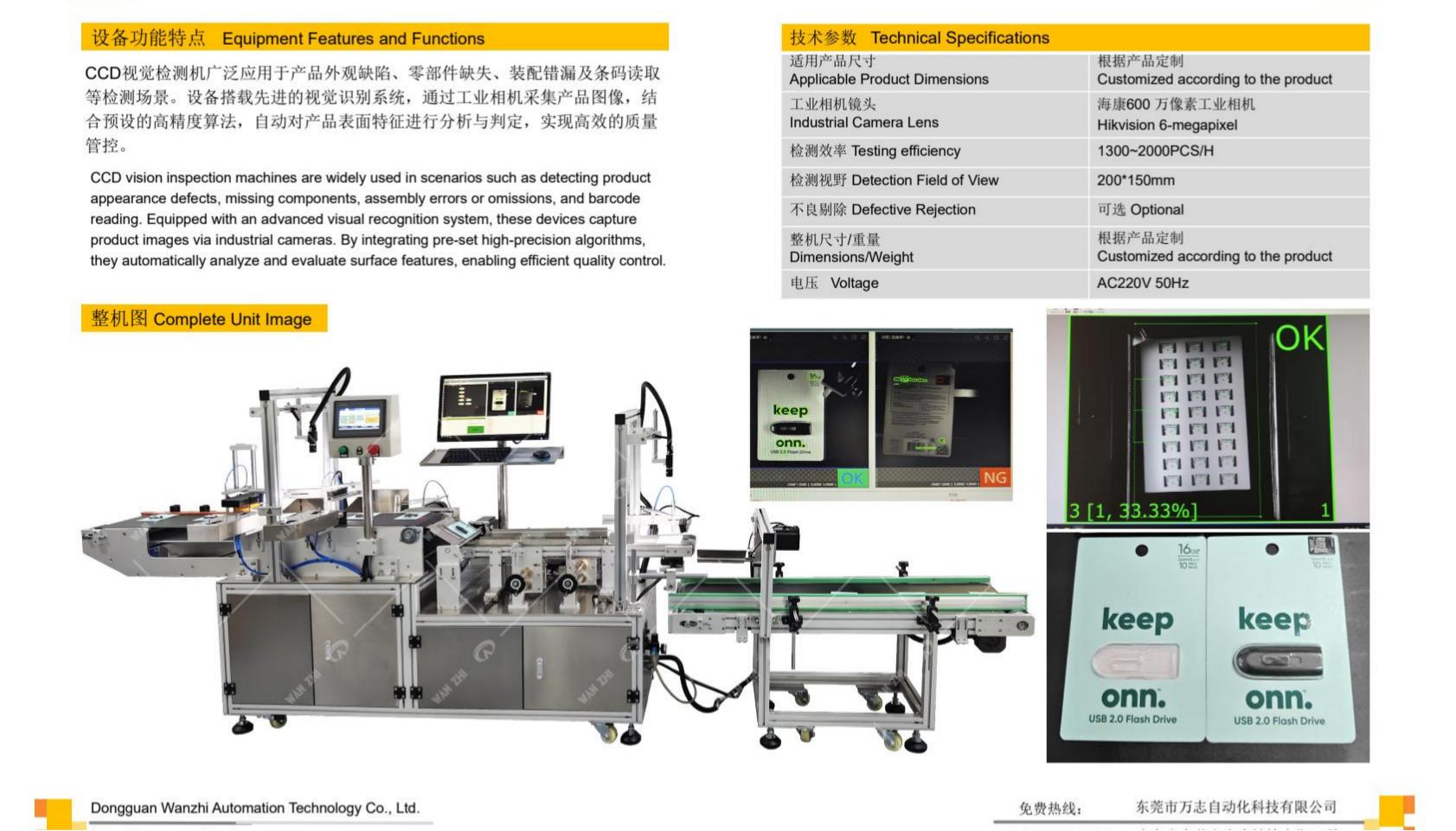
Second, the response logic of the photoelectric trigger. Large cartons are moving on the conveyor, and there is a millisecond-level delay between the fiber-optic sensor detecting the carton edge and the labeling head starting. If the control system cannot compensate automatically for carton length and belt speed, label positions drift forward and backward — not a single skewed label, but a whole batch offset.
Third, the stability of the conveyor. It sounds basic, but it is exactly where many manufacturers fall short. When large, heavy cartons are conveyed at speed, uneven belt tension or insufficient frame rigidity makes the carton vibrate slightly. That vibration is amplified at the moment of labeling and shows directly in label flatness. Wanzhi Automation uses a gantry-type dual-support structure here: the labeling head is supported at both ends rather than in the usual cantilever design. It is a design aimed at large workpieces — with enough rigidity, the vibration is held down.
An engineer might say: I ran a sample test and accuracy was fine. But the cartons you tested were standard size with clean surfaces. On a real line, cartons come straight from the slitter with burrs on the edges and possibly tape residue on the surface. In that case, whether the labeling machine can adapt by adjusting parameters and structure is what matters.
This leads to the core logic of selection: do you want “equipment” or a “solution”? Equipment is generic; a solution is customized and debugged around your product, your process conditions and your line’s pace. Take Wanzhi Automation’s WZ-127: the number of heads, conveyor width and machine length can all be adjusted to the customer’s carton size, and even the mounting position of the photoelectric sensors and the labeling pressure setting are calibrated specifically before the machine leaves the factory.
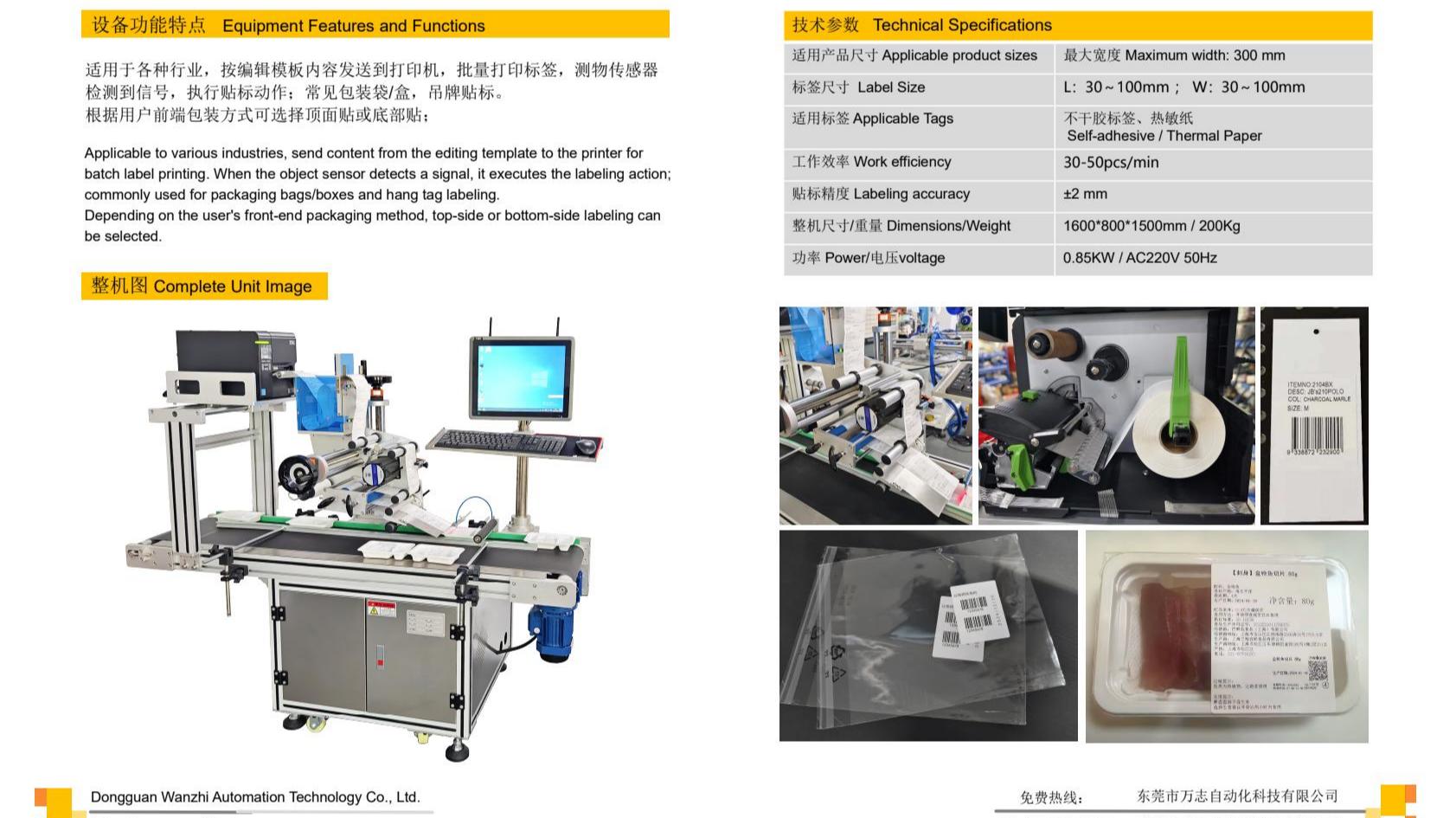
To cut costs, some manufacturers use standard cabinets with third-party generic modules. The parameters look similar on paper, but assembly tolerances and the depth of debugging are completely different. After three months on a line the difference in accuracy shows — not because some screw has loosened, but because the stress distribution and timing of the whole system are off.
So to judge a labeling machine, do not look at how fast it can run at peak; look at whether it holds accuracy under edge conditions — cartons outside the normal size range, a new batch of label material, a slight change in belt speed. Those that can usually have solid mechanical design behind them. The WZ-127’s “one machine, many uses” capability, for example — labeling unfolded large cartons, hollow boxes and woven bags, and also folders and PE bags — means a wide adjustment range and a pressing mechanism that adapts to substrates of different hardness. That tolerance does not come from a bigger motor; it comes from enough design margin in the structure.
One last point: unless your line will not expand or transform for decades, do not buy “good enough” equipment just to save money. What you are buying is a technical platform that can keep up with your business and make up for gaps. Engineers can decide only about this version; the truly smart buyer looks at how costly it is to modify the platform. Manufacturers with custom engineering capability, such as Wanzhi Automation, add value exactly here: they do not sell model numbers, they sell adaptability.